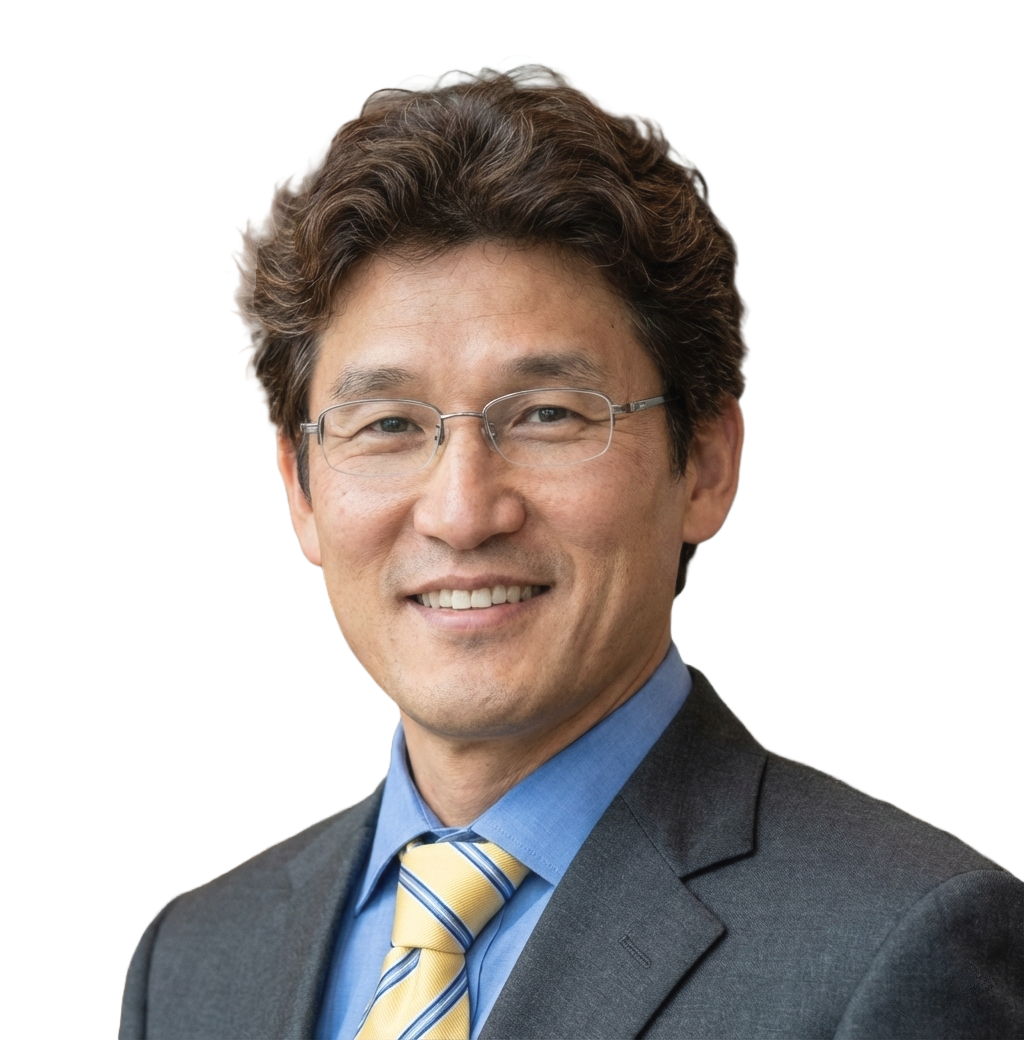
Profile / プロフィール
English Version
I study design theory for nonlinear control systems.
Since the 1990s, I have been developing a framework for robust nonlinear control that combines polynomial state-dependent Lyapunov functions with convex-hull finite approximations. The initial question that motivated this work was whether we could design the spatial structure in which control is guaranteed to hold, rather than searching for controllers after the fact.
My current research aims to integrate stability geometry—admissible regions and invariant sets—and information structure—the relationship between observation and action—into a unified framework. When the design leans too heavily toward functions, the flow of information becomes thin; when it leans too heavily toward information structure, the functional structure becomes ambiguous. Accepting this tension and integrating it as a design problem is the central challenge I am working on now.
In my elementary school graduation album, I wrote that I wanted to become a “designer,” accompanied by an illustration of someone sitting at a drafting table (I later learned that such a qualification does not formally exist). The sense of creating structures that do not break, while allowing natural flows to pass through them, has remained unchanged ever since.
日本語版
非線形制御系の設計理論を研究しています。
1990年代から、多項式型状態依存 Lyapunov 関数と凸包有限化を組み合わせたロバスト非線形制御の枠組みを構築してきました。出発点にあった問いは、「制御器を探索するのではなく、制御が成立する空間構造を先に設計できないか」というものです。
現在は、安定性の幾何(許容領域・不変集合)と情報構造(観測と作用の関係)を一つの枠組みに統合することを目指しています。関数の設計に寄りすぎれば情報の流れは希薄になり、情報構造に寄りすぎれば関数の構造は曖昧になる。その緊張関係を引き受け、設計として統合することが現在の課題です。
小学校の卒業アルバムには「設計士」と書きました(そういう資格はないと後で知りましたが)。ドラフターの前に座る人のイラストと共に。壊れない構造の中に自然な流れを通すという感覚は、今も変わっていません。
Authorship note: Drafted with Microsoft Copilot, Anthropic Claude and OpenAI Chatgpt · Final responsibility: Seigo Sasaki (revised wording)